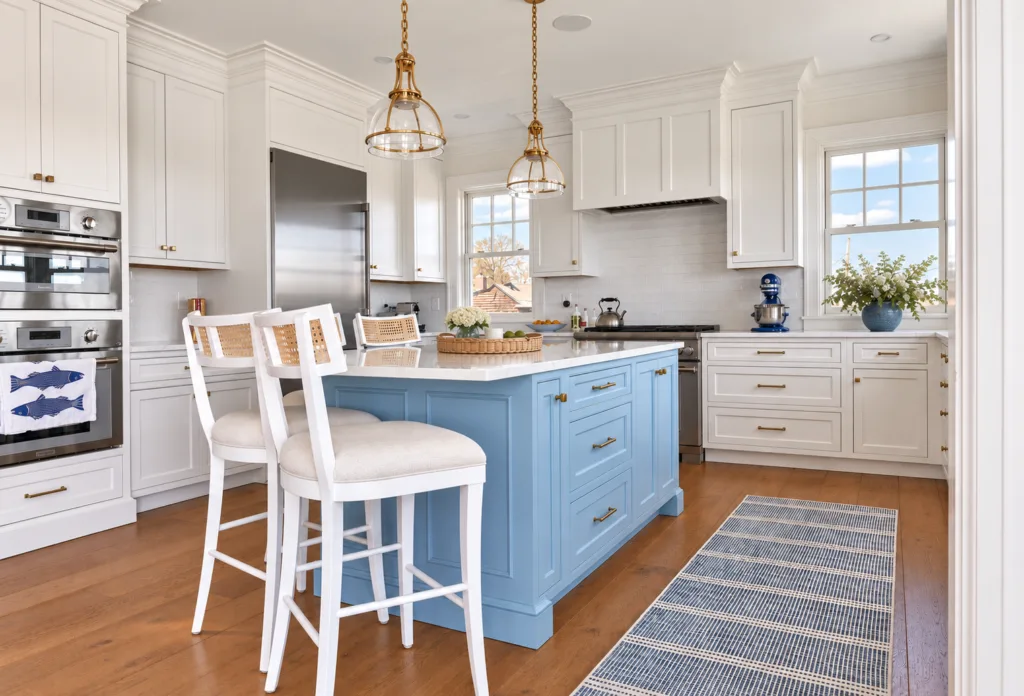
Walk into any cabinet showroom and you’ll hear the same words tossed around like they mean the same thing: semi-custom, inset, frameless, fully custom. They don’t.
StoneHill Cabinetry has been part of a cabinetry company building in Lancaster County, Pennsylvania since 1968, and the question we get asked most often is some version of “what’s actually the difference, and what am I getting with StoneHill?” We’re here to break down these custom cabinet options in plain terms.
What “Semi-Custom” Actually Means at StoneHill
The distinction comes down to one thing: whether a cabinet maker is working within an established system, or building completely from scratch for every single order.
Semi-custom cabinetry, StoneHill’s approach, starts with an established construction platform built on real manufacturing scale and decades of craftsmanship. Within that platform, sizing, finishes, wood species, and configuration all adjust to fit your kitchen, down to precise tolerances as fine as 1/16 of an inch, so a cabinet built for an odd corner, a sloped ceiling, or a non-standard appliance opening still fits the way it’s supposed to. It’s a smarter way to get real personalization and precision fit, without the extended price tag and timeline of engineering every cabinet completely from zero.
Fully custom cabinetry, the kind you’d get from a bespoke-only cabinet shop, has no predetermined system at all. Every cabinet is built to order from raw material, which offers total control but comes with a meaningfully higher price and longer lead time.
For most kitchens, even ones with real quirks, StoneHill’s semi-custom precision and flexibility cover it.
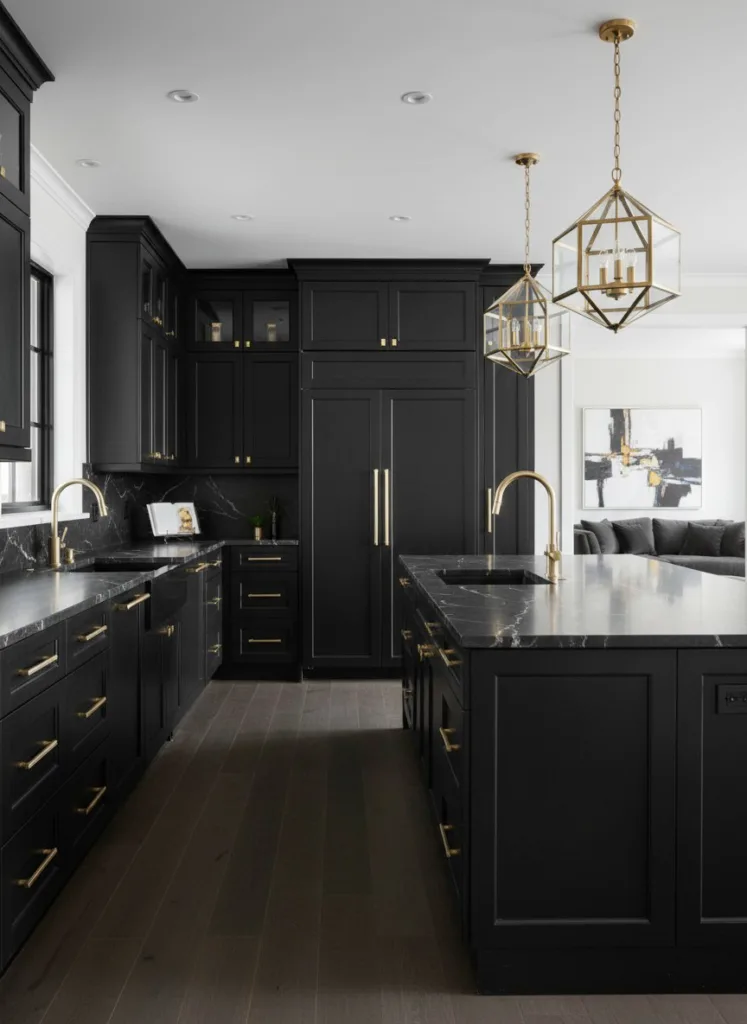
Inset vs. Frameless Construction
With semi-custom as the foundation, the next decision is how the cabinet itself is built. This is a construction question, not a style question, though it does affect the look of your kitchen.
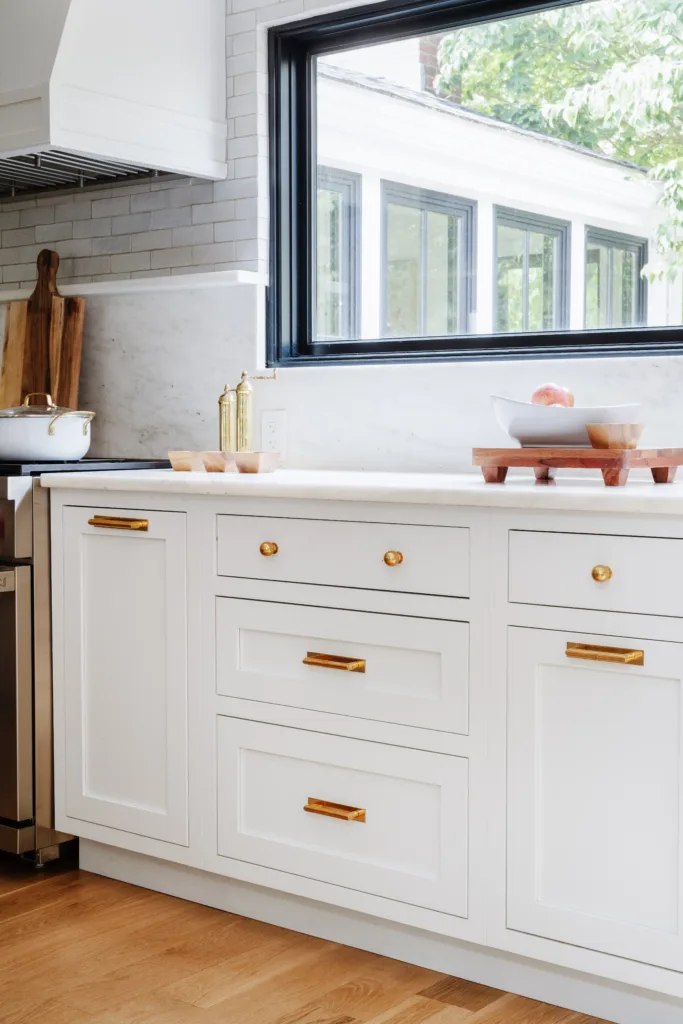
Inset construction sets the cabinet door inside the face frame, flush with the surrounding wood, similar to a fine piece of furniture. It’s a traditional style that requires tighter tolerances and more precise craftsmanship, since even small gaps are visible. Within inset, you’ll also see flush inset and beaded inset as options, with beaded inset adding a small decorative bead around the frame opening.
Frameless construction, sometimes called full-access construction, removes the face frame entirely. Doors and drawers attach directly to the cabinet box, which opens up the interior for slightly more usable storage space and gives the kitchen a cleaner, more modern line.
Framed overlay sits between the two. It keeps the traditional face frame but lets the doors overlay most of it, covering more of the frame than an inset style while still offering a bit more forgiveness in fit than true inset work.
At StoneHill, all four construction methods, flush inset, beaded inset, framed overlay, and frameless, are available within our semi-custom line, built by hand from premium hardwoods like maple, cherry, and red oak.
Pair StoneHill’s semi-custom system with frameless construction for a clean, efficient kitchen on a faster timeline, or with beaded inset for a traditional, furniture-grade look with tight, precise reveals throughout. There’s no wrong combination, only the one that matches your space, your style, and your budget.
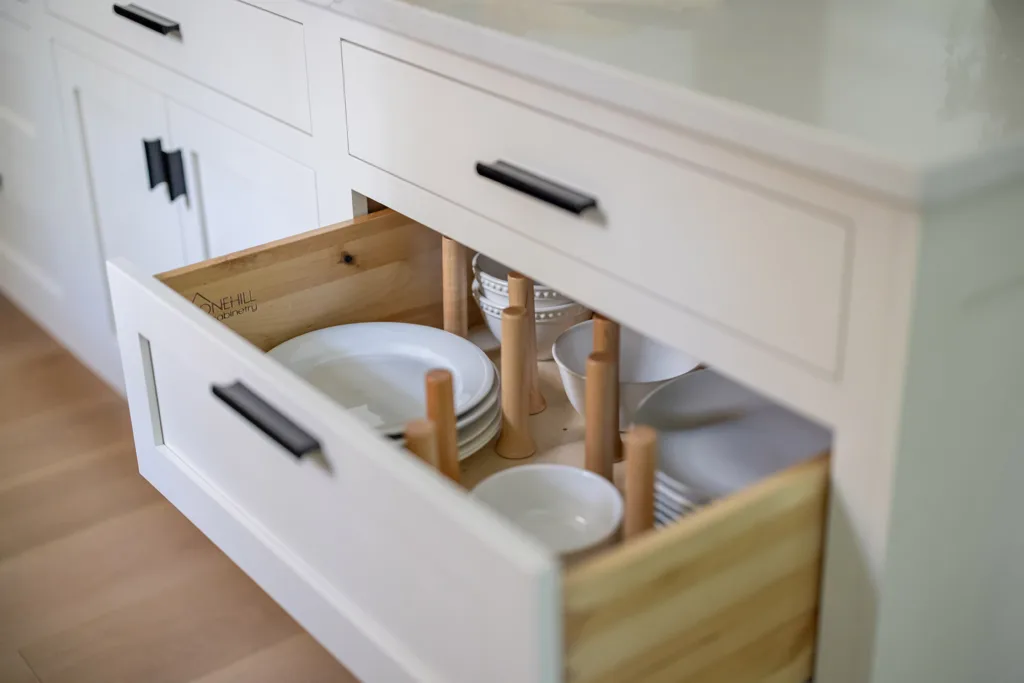
Why This Decision Matters More Than Homeowners Expect
Choosing the wrong construction style or sizing system now can mean living with wasted corner space, doors that don’t quite sit flush, or a kitchen that never feels finished, for years.
When you’re comparing cabinet makers, it’s worth asking whether their construction meets recognized industry benchmarks, like those set by the Kitchen Cabinet Manufacturers Association. Those standards cover things like structural integrity, finish durability, and drawer function, details that matter far more once the cabinets are installed and in daily use than they do on a showroom floor.
Choosing the Right Option for Your Home
A few questions worth asking yourself before you decide:
- Does your kitchen have standard dimensions, or unusual angles, corners, and appliance openings?
- Do you want a traditional, furniture-like look, or a clean, modern line?
- How important is maximizing interior cabinet storage versus a classic inset appearance?
- What’s your timeline, and how much flexibility do you have on lead time?
There isn’t a universally “better” answer among semi-custom’s finishes, inset, and frameless construction. There’s only the combination that fits how you actually live in and use your kitchen.
The Bottom Line
Semi-custom describes how much personalization you have in sizing, wood, and finish, all built on StoneHill’s established platform. Inset and frameless describe how the cabinet itself is built, and how it looks and functions day to day. Understanding both, together, is what lets you walk into a design conversation and ask for exactly what you want, instead of guessing.
Frequently Asked Questions
Not necessarily. Fully custom, from-scratch work offers unlimited flexibility, but StoneHill’s semi-custom system already delivers real precision and personalization for the vast majority of layouts, at a lower cost and shorter lead time.
Both set the door inside the face frame. Beaded inset adds a small decorative bead around the frame opening; flush inset keeps the frame plain.
No. Frameless is a construction style, not a quality tier. It simply removes the face frame for a cleaner look and slightly more interior access.
Yes, though most homeowners choose one construction style throughout for a cohesive look, using layout and door style to add variety instead.
Every cabinet is built in our Lancaster County, Pennsylvania facility by skilled artisans, using the same premium hardwoods and construction standards on every semi-custom order, and backed by our limited warranty.
After final sign off, our lead time is 6-8 weeks.
Find a Designer
Ready to decide which construction style, inset or frameless, is right for your semi-custom kitchen? Connect with one of our trusted design partners, who can walk your space and help translate these options into a kitchen built specifically for you.