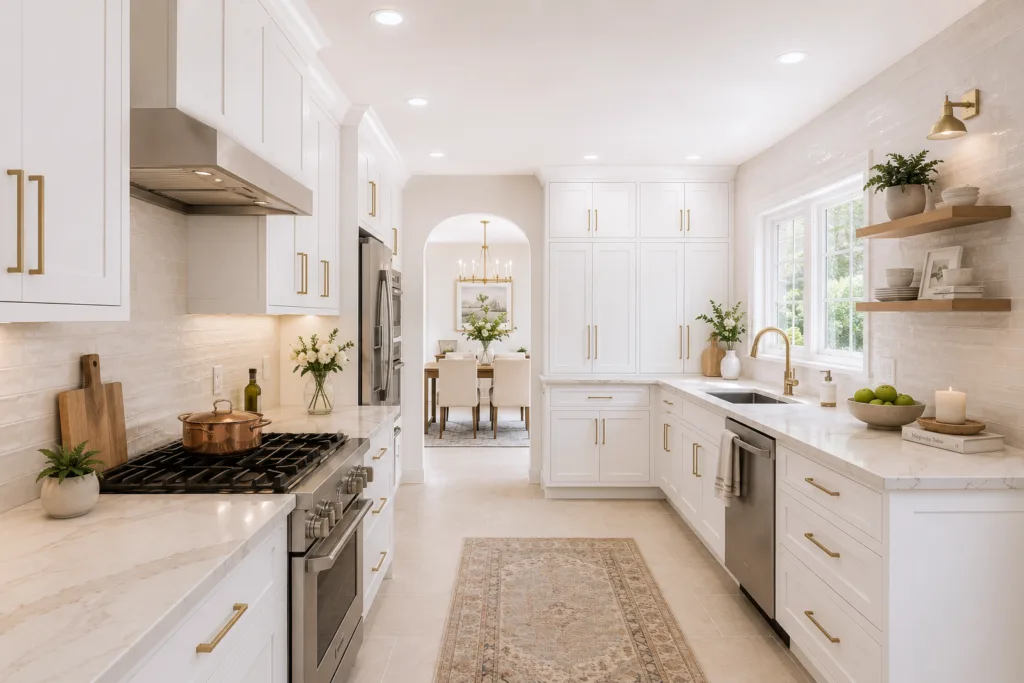
A kitchen can have beautiful finishes, a great island, and high end appliances, and still feel hard to use. More often than not, the problem is not the cabinets themselves. It is the layout. That is why kitchen cabinet layout ideas matter so much when planning a remodel or a new build. The right layout determines how easily you move through the room, how much you can store, and how good the kitchen feels to cook in every single day.
A well planned layout brings order to a kitchen before a single drawer is even opened. It shapes where you stand to prep, where dishes land after they are washed, and how far you walk between the stove and the sink. When that flow works, the whole kitchen feels calmer and more capable.
Why Kitchen Cabinet Layout Matters So Much
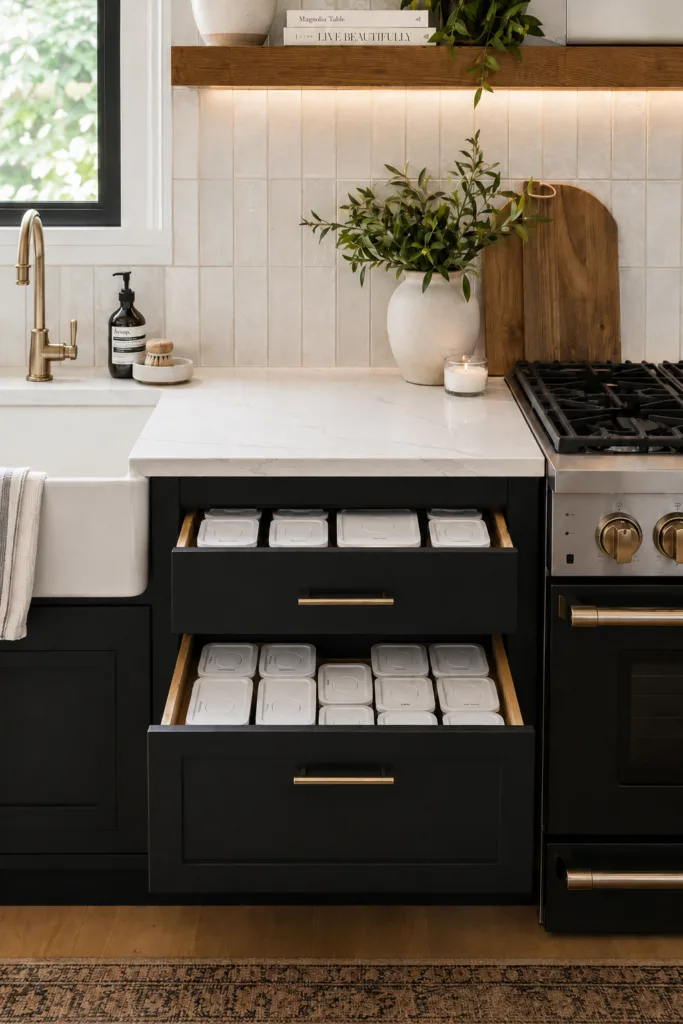
Cabinet layout is the foundation of a functional kitchen. Even premium cabinetry can feel frustrating if it is placed without a clear plan. Drawers that collide with appliance doors, cabinets that block natural walkways, or storage that sits too far from where it is actually used can all wear on a kitchen over time. None of these issues show up in photos, but they show up every single day once you are the one living with them.
A thoughtful layout solves these problems before they start. It considers how you cook, where you store everyday items, and how multiple people might move through the kitchen at once. Good layout planning also makes the most of every inch, which means less wasted space and more room for the things that matter most to your routine.
This is also where storage and design begin to work together. A kitchen with a smart layout often needs fewer cabinets to feel fully stocked, simply because every cabinet is placed with purpose. Layout planning also affects long term satisfaction in ways that are easy to overlook. A kitchen with an awkward flow tends to feel dated long before its finishes do, while a kitchen built around a smart, well considered layout tends to age gracefully.
Classic Kitchen Layouts and How They Support Storage
Most kitchens are built around a few proven layout types, and each one offers different strengths for cabinet storage and flow. Understanding these shapes is a useful starting point before deciding how to personalize a layout for your own home.
- L-shaped kitchens: This layout uses two connecting walls, which leaves the rest of the room open for a table or gathering space. Corner cabinets become especially important here, and features like lazy Susans or corner pull-outs help turn that space into usable storage instead of a dead zone.
- U-shaped kitchens: With cabinetry along three walls, this layout offers some of the most generous storage of any kitchen shape. It also creates a natural work zone, since everything from the stove to the sink can sit within easy reach. Two corners means two opportunities to either gain extra storage or lose it, depending on how well they are planned.
- Galley kitchens: Two parallel runs of cabinets make galley kitchens efficient and quick to work in, since everything is close at hand. The tradeoff is width, so cabinet depth, drawer choice, and vertical storage all carry more weight in a layout like this.
- Island kitchens: Adding an island to any of the layouts above introduces a whole new storage opportunity. Islands can house deep drawers, pull-out trash and recycling bins, or even a secondary prep sink, all while anchoring the room visually.
- Peninsula kitchens: A peninsula offers many of the same benefits as an island, including extra counter space and storage, while working well in kitchens that do not have room for a freestanding island.
Each of these layouts can be customized further with custom cabinets that are built to fit the exact dimensions of your space, rather than adjusted to fit a standard size. That distinction matters more than it might seem. Stock cabinetry is built to common measurements and then trimmed or filled to fit a room, while custom cabinetry is designed around your actual walls, appliances, and storage needs from the very first sketch.
The Kitchen Work Triangle, and What Comes After It
For decades, kitchen designers have leaned on the classic work triangle, which connects the sink, the stove, and the refrigerator in a layout that minimizes wasted steps. This idea still holds up well in many kitchens, especially smaller or more traditional layouts where one cook tends to work at a time.
More recently, many designers have shifted toward thinking in zones rather than a single triangle. A prep zone near the sink, a cooking zone near the range, and a storage zone near the pantry or refrigerator can all be planned independently. This approach works especially well in larger kitchens or homes where more than one person cooks at once, since it reduces the chances of two people crossing paths in the same tight space.
Whether you lean on the traditional triangle or a zone based approach, the goal stays the same. Cabinet placement should support how you actually move through the kitchen, not just fill the available wall space.
Storage Features That Strengthen Any Layout
Once the overall layout is set, the right storage features can make a major difference in how the kitchen performs day to day. These details are often what separates a kitchen that simply looks good from one that genuinely works well.
- Deep drawers: Deep drawers near the cooktop keep pots, pans, and lids close at hand, and they are often easier to use than lower cabinets with fixed shelves.
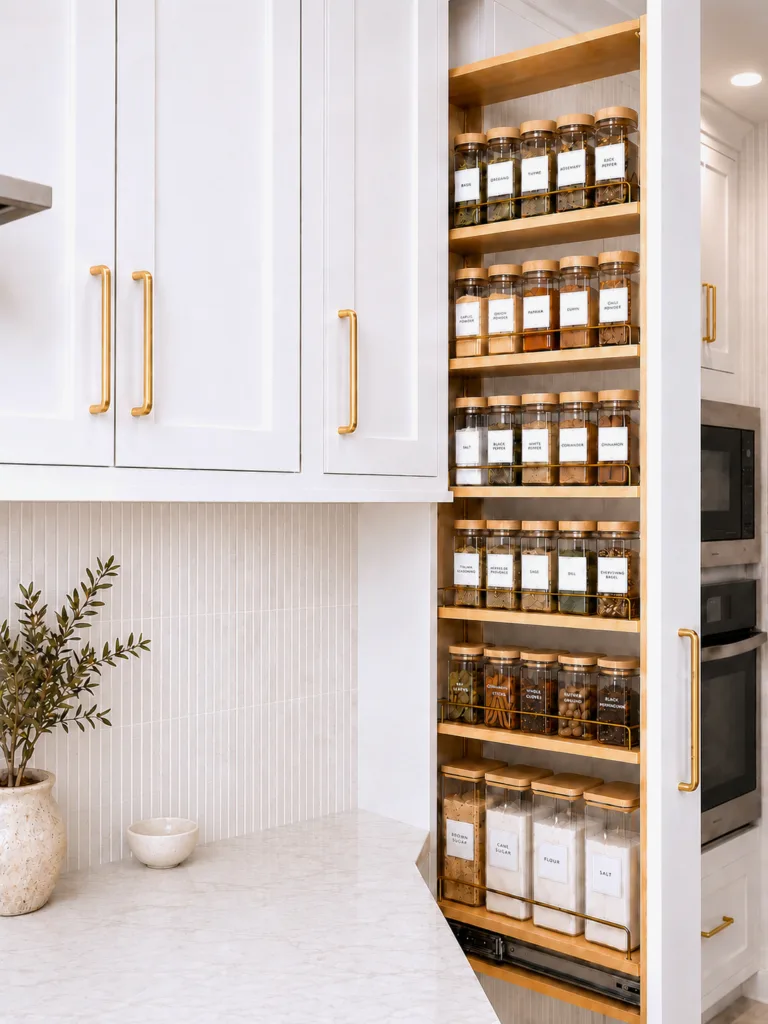
- Pull-out shelving: Pull-outs bring the back of a cabinet forward, which is especially helpful for pantry items, spices, or cleaning supplies that tend to get lost in deep storage.
- Corner storage solutions: Lazy Susans, corner drawers, and diagonal cabinets all help turn awkward corners into some of the most useful storage in the kitchen.
- Vertical dividers: Tall, narrow cabinets with vertical dividers are ideal for baking sheets, cutting boards, and trays that are hard to store flat.
- Appliance garages: Built-in spaces for small appliances keep countertops clear while still keeping items like mixers or coffee makers within easy reach.
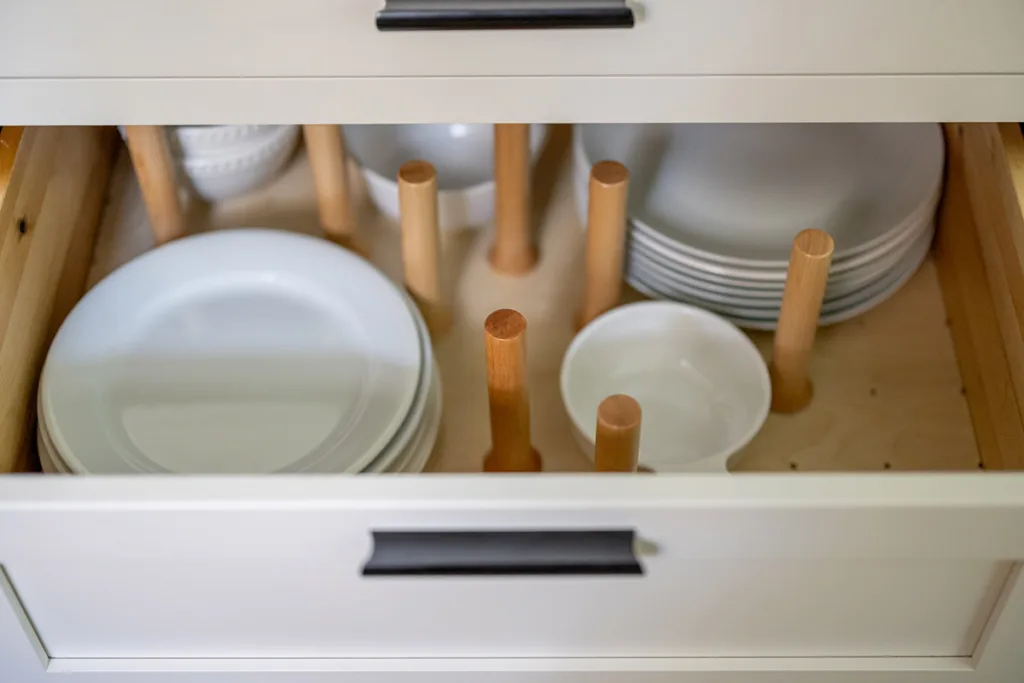
- Built-in organizers: Drawer dividers, tray inserts, and utensil organizers keep smaller items separated and easy to find, even in a busy kitchen.
None of these features work in isolation. They depend on a layout that places them exactly where they will be used, which is one of the clearest advantages of custom cabinetry over stock options. A pull-out spice rack only helps if it sits near the cooktop, and a deep drawer for pots only earns its keep if it is close to where those pots are actually used.
Extending Layout Thinking Beyond the Kitchen
Smart layout planning does not need to stop at the kitchen walls. Many homes benefit from custom built in cabinets that extend the same thinking into nearby spaces, such as a butler’s pantry, a mudroom off the kitchen, or a built-in banquette near the breakfast nook. These adjacent spaces often absorb overflow storage that would otherwise crowd the main kitchen cabinets, which keeps the primary cooking area cleaner and easier to use.
A butler’s pantry, for example, can house everyday dishware, serving pieces, and small appliances that are used often but not constantly, freeing up prime kitchen real estate for the tools and ingredients used in daily cooking. A built-in bench with storage underneath can give a breakfast nook a place for linens or extra seating cushions without adding bulky furniture to the room. When these built-in elements are planned alongside the kitchen layout, rather than added as an afterthought, the whole space feels more connected and considerably more functional.
Matching Layout to the Way You Actually Cook
The best kitchen cabinet layout ideas are the ones built around real habits, not general trends. A household that bakes often may need a dedicated zone with a marble or stone countertop, wide drawers for baking sheets, and easy access to mixers and measuring tools. A family that entertains often may want a beverage or serving station near the dining area, separate from the main cooking zone, so guests are not standing in the cook’s way.
Households with multiple cooks often benefit from layouts that intentionally separate prep and cleanup zones, so two people can move through the kitchen without bumping into each other. Smaller kitchens may rely more heavily on vertical storage, tall cabinets, and multipurpose drawers to make the most of limited square footage, since every cabinet has to work harder when there is less of it to go around.
Families with children often think about layout a little differently as well. Lower drawers within easy reach can hold snacks, dishes, or lunch supplies that kids can access on their own, while items that require more caution can be placed higher up.
This is the real value of a custom layout. It is not just about choosing a shape on a floor plan. It is about understanding how a kitchen will actually be lived in, and then designing the cabinetry to support that.
Common Layout Mistakes Worth Avoiding
Even with good intentions, certain layout mistakes show up again and again in kitchen remodels. Recognizing them early can save a lot of frustration later.
One common issue is placing too much distance between the main work zones, which turns simple tasks into unnecessary walking. Another is filling a kitchen with upper cabinets that go largely unused, while lower storage becomes overcrowded, simply because lower cabinets are easier to reach. Doorways and walkways that cut directly through a busy prep area can also create traffic jams, especially in households where more than one person is in the kitchen at a time.
Oversized islands are another frequent misstep. An island that looks impressive on a floor plan can end up eating into walkway space, making the kitchen feel cramped rather than open. Similarly, corner cabinets that are left as simple shelves, without any pull-out or rotating mechanism, often become the most wasted storage in the entire kitchen.
The good news is that all of these issues can be avoided with careful planning, and they are exactly the kind of details an experienced kitchen designer is trained to catch before construction ever begins.
Why Working With a Kitchen Designer Makes a Difference
A skilled kitchen designer can take a layout from functional to exceptional. Designers look closely at how you move through your current kitchen, where storage tends to run out, and what daily tasks feel harder than they should. From there, they translate that information into a layout that solves real problems, not just one that looks good on paper.
A designer can also help balance layout with style, so the cabinetry feels like a natural extension of the rest of your home. Door style, finish, and hardware all play a role, but they work best when they are layered onto a layout that was already built with care.
This kind of planning pays off well beyond the day your kitchen is finished. A layout that fits your life from the start tends to stay organized and functional for years, long after the excitement of a remodel has settled into everyday routine.
Building a Layout That Lasts
A great kitchen layout brings together flow, storage, and style in a way that feels effortless, even though it takes real planning to get there. Choosing the right shape, defining clear work zones, and layering in smart storage features all contribute to a kitchen that works as well as it looks.
At StoneHill Cabinetry, every cabinet is built to fit the layout you choose, down to 1/16 of an inch. That level of precision means your storage is never an afterthought. It is part of the plan from the very beginning. Working with a StoneHill design partner can help you shape a layout that fits your home, your habits, and the way you want your kitchen to feel for years to come.
Find a Designer
We have hand-selected design partners across the country. These designers can guide your vision for your home into a fully satisfying reality.